ANALOG SUMMING, PROCESSING & REAMPING
Your recordings.
Shaped through analog.
Send your tracks or stems to Sacramento Sound Solutions for analog processing, summing, and reamping. Our Cranborne-based system connects your digital session with analog preamps, EQ, compression, and summing, so we can shape individual parts or bring them together into a stereo mix.
Keep the performance you recorded at home. Explore a different vocal character, more controlled dynamics, a new guitar sound, or subtle processing across a stereo mix. We’ll listen to your reference mix, agree on the direction, and return processed audio files for your project.
Discuss your tracksSTART WITH YOUR SOUND
What would you like to change?
You don’t need to know which compressor or preamp to choose. Tell us what you hear and what you want to change: a vocal that feels too sharp, bass that needs more consistency, drums that need more impact, or a guitar part that needs a different amp sound.
You can request a particular piece of equipment or have SSS recommend a chain around your recording.
CHOOSE YOUR STARTING POINT
A single part.
A group of tracks.
A stereo mix.
Analog summing for your mix
Bring separate elements of your mix together through our Cranborne analog summing system. Send individual tracks or grouped stems—such as drums, bass, instruments, and vocals—and we can incorporate hardware processing before capturing the combined stereo mix.
Keep the balance you’ve developed or have SSS help shape it. We agree on the stem layout, processing, and any mix changes before the session. Analog summing combines separate signals outside the computer; it is different from passing an already-combined stereo file through a processor.
One system, several ways to work
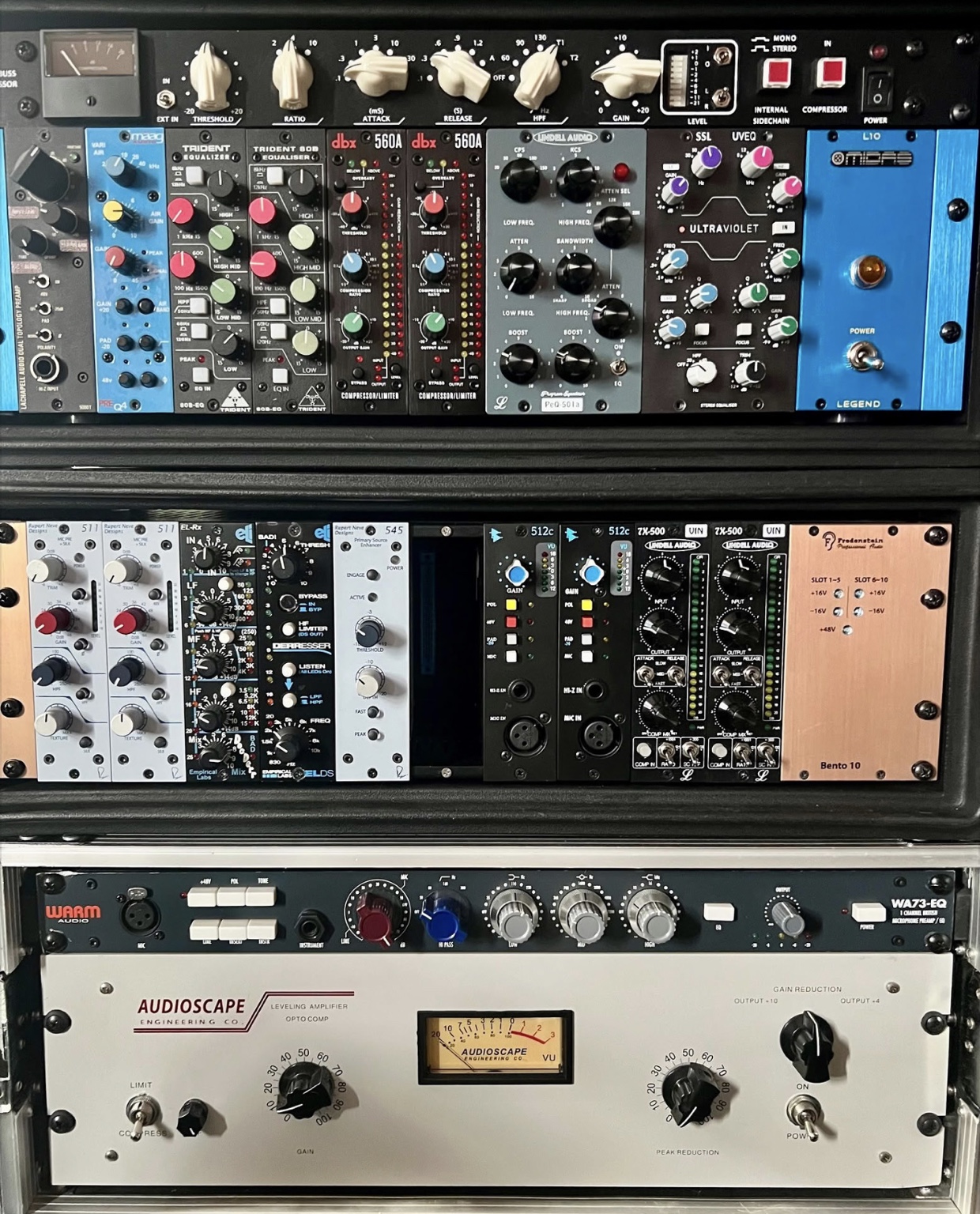
The Cranborne 500R8 and 500ADAT provide conversion, 500-series integration, and analog summing. They work alongside our additional 500-series racks and outboard equipment to build a signal path around the project.
The routing is selected for the number of tracks and the hardware your project needs.
Vocal and instrument processing
Shape recorded vocals, bass, drums, guitars, keyboards, and other sources with hardware EQ, compression, and coloration.
Processing can be restrained or more pronounced. We choose settings in the context of your rough mix, with attention to the performance, dynamics, and space the track needs to occupy.
Microphone-preamp coloration
An existing recording can also be passed through a microphone preamp for another tonal option. We use appropriate level conversion to feed the recorded signal into the selected preamp, then capture the result.
Options include Hazelrigg DVA, Rupert Neve Designs 511, API 512c, and SSL VHD preamps. The choice depends on the source and the character you want.
This adds another stage of processing to your recording; the original microphone, room, and performance remain part of the sound.
Guitar and bass reamping: real amps, cabinets, and microphones
Record your guitar or bass directly through a DI or your audio interface’s instrument input, then send us the clean, unprocessed track. We play your recorded performance through a reamp interface into a real amplifier and speaker cabinet, capture it with microphones, and send the recordings back for your mix.
Your performance stays the same while we explore amplifier settings, cabinet choices, pedals, and microphone placement. You can develop a new sound without replaying the part or turning up a loud amp at home.
A wider choice of amps through Skip’s Music
Our partnership with Skip’s Music opens up a broad range of guitar amplifiers and cabinets beyond the equipment in our recording rig. Have a particular amp in mind? Tell us the make and model, or send a reference for the tone you want. We’ll check availability and discuss suitable options.
We confirm the amplifier, cabinet, microphone approach, any additional equipment costs, and the number of alternate sounds before booking. Specific models are subject to availability.
Have an amp-simulator version you already like? Include it alongside the clean DI track and your rough mix so we can hear the direction. We return the agreed microphone tracks, with a shared start point so you can line them up in your session.
Stereo stems and mix processing
Send a stereo drum group, backing-vocal group, instrumental stem, or finished mix for coordinated EQ, compression, or coloration.
Hardware options include WesAudio RHEA, Serpent Audio SB4000, SSL Ultraviolet EQ, and Handsome Audio Zulu tape-style processing. Selected mono processors can also be paired where appropriate.
A complete remix or release mastering can be included in the agreed project.
Explore recording services and equipment →HOW IT WORKS
Send. Shape. Bring it back into your mix.
- Share a reference mix. Send a listening link, the number and length of the files, and a description of the changes you want.
- Agree on the session. We confirm the processing approach, versions, price, turnaround, and revision allowance before booking.
- Send your audio. We’ll confirm the file requirements and transfer method for your project.
- Receive the results. Get the individual processed tracks, analog-summed stereo mix, or both specified in your quote, along with a summary of the processing and any agreed alternate versions. Files intended to return to your session retain the agreed start point, with hardware round-trip delay accounted for.
PREPARING YOUR FILES
What to send.
For the initial conversation, a rough mix and a description of your goal are enough.
For processing, we generally ask for:
- WAV files at the project’s original sample rate, preferably 24-bit or 32-bit float.
- A common export start point for tracks that need to line up.
- Clear track names and enough length to preserve the end of each part.
- Your rough mix and any useful reference songs.
- Clean DI tracks for conventional guitar or bass reamping.
Keep effects that are essential to the sound. When possible, also provide an unprocessed version so we have options. We’ll clarify what to bypass before you export.
An individual track is a separate recorded part, such as a lead vocal. A stem combines related parts, such as all backing vocals or the full drum mix. We can work with either.
Planning your processing session.
How should I prepare stems for analog summing?
Send grouped WAV files from the same start point, with the intended balance, automation, and essential effects preserved. Include your current stereo mix as a reference. We’ll agree on mono and stereo groups, sample rate, and how to handle master-bus processing before you export. A stereo stem uses two analog channels; available channels depend on the agreed routing.
Can I send just one vocal or instrument?
Yes. You can book processing for a selected part without handing over the entire mix.
Can analog processing fix a poor recording?
It can change tone and dynamics, but it cannot reliably undo clipping, heavy room sound, or processing already printed into the file. We’ll assess the source and discuss whether processing, editing, or recording the part again is the useful next step.
Do I need to be in Sacramento?
No. This service can be handled through file exchange. SSS is based in the Sacramento region, and your recordings can be sent remotely.
What does it cost?
Each project is quoted according to the number and duration of files, setup requirements, processing chains, alternate versions, and revisions. Tell us your priorities and budget so we can recommend a practical starting point.
What are you working on?
Send a rough mix and tell us which parts you want to develop. We’ll help you choose the next step.
ANALOG SUMMING, PROCESSING & REAMPING
Request a processing quote(916) 239-9457Based in Sacramento. Available through remote file exchange.